Travel today is increasingly shaped by intention—by the desire to seek out places that inspire, while treading more thoughtfully along the way. In Bohol, this takes form through journeys that connect people not only to destinations, but to discovery itself—where every landscape tells a deeper story of time, resilience, and care.
Discovering Bohol: A Treasure Trove of Natural Wonders begins with a place unlike any other. Recognized in 2023 as the Philippines’ first UNESCO Global Geopark, Bohol’s 150-million-year geological history unfolds across rolling hills, limestone formations, and coastal ecosystems shaped over millennia—each one offering a window into the island’s natural legacy.
The Bilar Man-Made Forest,a reforestation success story rooted in post-war environmental recovery efforts. (Source: Guide to the Philippines)
Bohol’s most iconic landmark, the Chocolate Hills, features over 1,200 cone-shaped formations that turn brown during the dry season, resembling rows of chocolate mounds. Beyond their visual appeal, these hills are a testament to the island’s ancient marine origins—formed from coral deposits uplifted over millions of years. Today, they stand as one of the country’s most recognized natural wonders, symbolizing both the beauty and geological significance of Bohol.
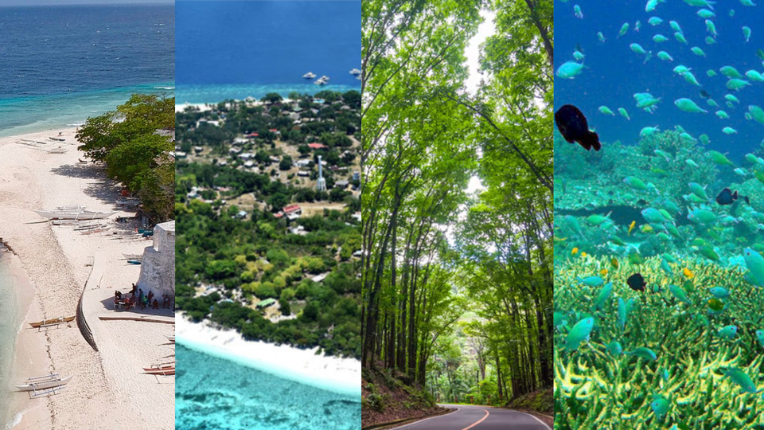
The Bilar Man-Made Forest offers a different kind of wonder—one shaped by human hands and long-term vision. Stretching along the road between Loboc and Bilar, its dense canopy of mahogany trees traces back to reforestation efforts in the 1940s and 1950s, following the environmental degradation brought about by World War II. This large-scale initiative, made possible through collaboration between government and private sector stakeholders, aimed to prevent soil erosion and protect the Loboc River watershed. Today, it stands as a cool, shaded corridor that reflects decades of commitment to environmental stewardship.
The Danajon Double Barrier Reef, one of only a few double barrier reef systems in the world, showcasing Bohol’s rich marine biodiversity. (Source: Dive Scotty)
Off the coast of Bohol lies the Danajon Double Barrier Reef, one of only six known double barrier reef systems globally. This rare formation supports a rich marine ecosystem, serving as both a natural habitat for diverse species and a vital resource for coastal communities. Its shallow waters and intricate reef structures make it an important site for conservation and sustainable tourism, highlighting the delicate balance between livelihood and preservation.
In Pamilacan Island, nature and community come together through responsible tourism. Once known for traditional whale hunting, the island has transformed into a model for marine conservation, where locals now guide visitors in dolphin and whale watching experiences. This shift not only protects marine life but also creates sustainable livelihoods, offering travelers a chance to witness these majestic creatures while supporting community-led efforts.
Pamilacan Island, known for its community-led dolphin and whale watching experiences rooted in conservation. (Source: Trip Advisor)
Balicasag Island is a haven for marine biodiversity, with protected waters that teem with vibrant coral reefs, sea turtles, and schools of tropical fish. As one of Bohol’s premier diving and snorkeling destinations, it provides an up-close look at thriving underwater ecosystems—reinforcing the importance of conservation in maintaining the health of the island’s natural resources.
This sense of mindful exploration begins upon arrival at Bohol–Panglao International Airport (ACC: BPIA; IATA: TAG; ICAO: RPSP), a gateway designed to reflect the environment it serves. As the country’s first eco-airport, it operates with sustainability at its core—utilizing natural ventilation and solar energy to significantly reduce power consumption. A solar-powered hot water system helps prevent an estimated 18 tonnes of carbon dioxide emissions annually, complemented by rainwater collection systems and an expansive 11-hectare green landscape with around 1,700 trees.
Balicasag Island’s marine sanctuary, home to vibrant coral reefs and diverse marine life. (Source: Tourism Infrastructure and Enterprise Zone Authority)
From the limestone formations that define its horizons to the quiet rhythm of its forests and waters, Bohol unfolds best at a pace that allows it to be experienced fully. Whether moving through shaded forest roads, exploring marine sanctuaries, or tracing geological landscapes shaped over millions of years, each moment reveals something distinct about the island’s character.
Bohol–Panglao International Airport, the Philippines’ first eco-airport designed with sustainability at its core.
In Bohol, discovery is not rushed—it is something that naturally comes into focus when travel is given space to be present.
Stay updated with Aboitiz InfraCapital Airports—subscribe to their AeroConnect newsletter today! [SIGN UP HERE: https://tinyurl.com/aeroconnect2025]





Travel today is increasingly shaped by intention—by the desire to seek out places that inspire, while treading more thoughtfully along the way. In Bohol, this takes form through journeys that connect people not only to destinations, but to discovery itself—where every landscape tells a deeper story of time, resilience, and care.
Discovering Bohol: A Treasure Trove of Natural Wonders begins with a place unlike any other. Recognized in 2023 as the Philippines’ first UNESCO Global Geopark, Bohol’s 150-million-year geological history unfolds across rolling hills, limestone formations, and coastal ecosystems shaped over millennia—each one offering a window into the island’s natural legacy.
Bohol’s most iconic landmark, the Chocolate Hills, features over 1,200 cone-shaped formations that turn brown during the dry season, resembling rows of chocolate mounds. Beyond their visual appeal, these hills are a testament to the island’s ancient marine origins—formed from coral deposits uplifted over millions of years. Today, they stand as one of the country’s most recognized natural wonders, symbolizing both the beauty and geological significance of Bohol.
The Bilar Man-Made Forest offers a different kind of wonder—one shaped by human hands and long-term vision. Stretching along the road between Loboc and Bilar, its dense canopy of mahogany trees traces back to reforestation efforts in the 1940s and 1950s, following the environmental degradation brought about by World War II. This large-scale initiative, made possible through collaboration between government and private sector stakeholders, aimed to prevent soil erosion and protect the Loboc River watershed. Today, it stands as a cool, shaded corridor that reflects decades of commitment to environmental stewardship.
Off the coast of Bohol lies the Danajon Double Barrier Reef, one of only six known double barrier reef systems globally. This rare formation supports a rich marine ecosystem, serving as both a natural habitat for diverse species and a vital resource for coastal communities. Its shallow waters and intricate reef structures make it an important site for conservation and sustainable tourism, highlighting the delicate balance between livelihood and preservation.
In Pamilacan Island, nature and community come together through responsible tourism. Once known for traditional whale hunting, the island has transformed into a model for marine conservation, where locals now guide visitors in dolphin and whale watching experiences. This shift not only protects marine life but also creates sustainable livelihoods, offering travelers a chance to witness these majestic creatures while supporting community-led efforts.
Balicasag Island is a haven for marine biodiversity, with protected waters that teem with vibrant coral reefs, sea turtles, and schools of tropical fish. As one of Bohol’s premier diving and snorkeling destinations, it provides an up-close look at thriving underwater ecosystems—reinforcing the importance of conservation in maintaining the health of the island’s natural resources.
This sense of mindful exploration begins upon arrival at Bohol–Panglao International Airport (ACC: BPIA; IATA: TAG; ICAO: RPSP), a gateway designed to reflect the environment it serves. As the country’s first eco-airport, it operates with sustainability at its core—utilizing natural ventilation and solar energy to significantly reduce power consumption. A solar-powered hot water system helps prevent an estimated 18 tonnes of carbon dioxide emissions annually, complemented by rainwater collection systems and an expansive 11-hectare green landscape with around 1,700 trees.
From the limestone formations that define its horizons to the quiet rhythm of its forests and waters, Bohol unfolds best at a pace that allows it to be experienced fully. Whether moving through shaded forest roads, exploring marine sanctuaries, or tracing geological landscapes shaped over millions of years, each moment reveals something distinct about the island’s character.
In Bohol, discovery is not rushed—it is something that naturally comes into focus when travel is given space to be present.
Stay updated with Aboitiz InfraCapital Airports—subscribe to their AeroConnect newsletter today! [SIGN UP HERE: https://tinyurl.com/aeroconnect2025]
Share this:
Discover more from Great Travel Philippines
Subscribe to get the latest posts sent to your email.