From salt traditions and cacao farms to river journeys, heritage sites, and the iconic Chocolate Hills—Bohol comes alive through flavors, landscapes, and community experiences that tell the island’s story in every stop. (Source: Tourism Promotions Board Philippines)
Bohol is best experienced through its rhythm of everyday life—where food, nature, and culture are not separate stops, but part of one connected journey across the island.
The Chocolate Hills at golden hour—Bohol’s most iconic landscape and a natural symbol of the island. (Source: Tourism Promotions Board Philippines)
From coastal traditions and river landscapes to inland farms and heritage towns, the island offers travelers a way to explore that is both immersive and unhurried. Each experience reveals how deeply Bohol’s identity is shaped by its people, its land, and what it produces.
Begin along the coast at Asinan ni Tan Inong, where salt is still made by hand using traditional methods passed through generations. In Baclayon, heritage churches and old stone homes tell stories of history and faith, often paired with local dishes that reflect long-standing culinary traditions.
A slow river journey along Loboc, where local cuisine and music turn a simple meal into a cultural experience. (Source: Tourism Promotions Board Philippines)
The journey continues along the Loboc River, where floating restaurants serve regional dishes accompanied by live music—offering a calm, scenic way to experience Bohol’s countryside while sharing in its food culture.
Inland, the Tarsier Sanctuary offers a closer look at one of the world’s smallest primates in its natural habitat, reflecting the island’s strong commitment to conservation and biodiversity.
At Lasang Farm, cacao becomes part of the story of the place. Visitors follow the process from pod to tableya (Filipino artisan cacao tablets), learning how local farmers are shaping a growing farm-to-table culture rooted in Bohol’s agricultural heritage.
From cacao to tableya—Lasang Farm highlights Bohol’s growing farm-to-table and cacao heritage movement. (Source: Tourism Promotions Board Philippines)
The experience naturally leads to the Chocolate Hills, a landscape that defines the island itself—vast, quiet, and timeless, offering a moment to take in Bohol’s natural beauty.
Across the island, food is what connects each stop—salt from the sea, meals by the river, cacao from the hills, and dishes prepared in homes and communities all reflect a shared relationship with land and livelihood.
Traditional salt harvesting at Asinan ni Tan Inong, where centuries-old methods continue to shape coastal life and local flavors. (Source: Tourism Promotions Board Philippines)
Access to these destinations is made more seamless through the Bohol–Panglao International Airport, operated by Aboitiz InfraCapital Airports, serving as the island’s premier gateway for travelers beginning their journey into Bohol’s landscapes, flavors, and communities.


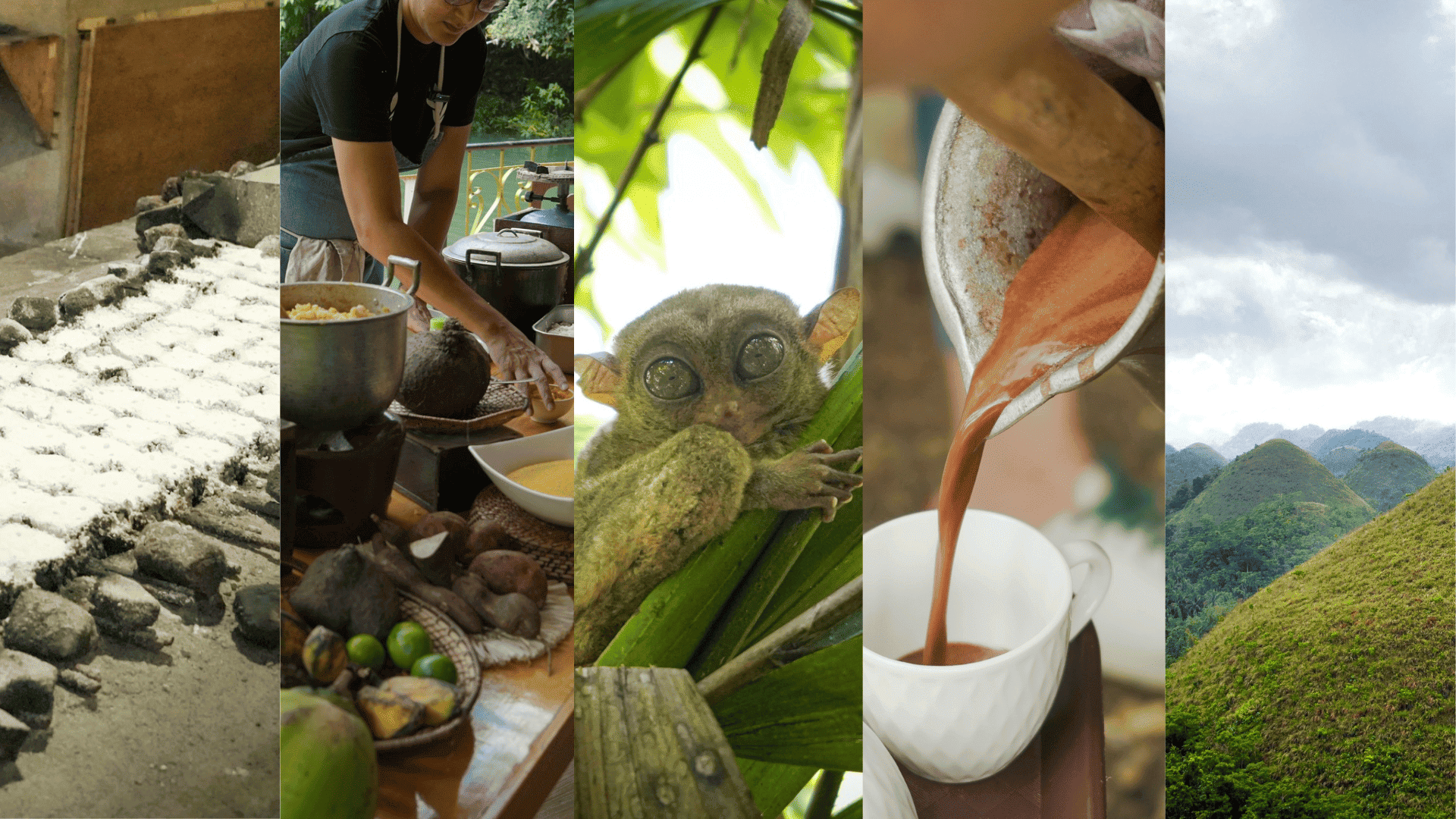

From salt traditions and cacao farms to river journeys, heritage sites, and the iconic Chocolate Hills—Bohol comes alive through flavors, landscapes, and community experiences that tell the island’s story in every stop. (Source: Tourism Promotions Board Philippines)
Bohol is best experienced through its rhythm of everyday life—where food, nature, and culture are not separate stops, but part of one connected journey across the island.
From coastal traditions and river landscapes to inland farms and heritage towns, the island offers travelers a way to explore that is both immersive and unhurried. Each experience reveals how deeply Bohol’s identity is shaped by its people, its land, and what it produces.
Begin along the coast at Asinan ni Tan Inong, where salt is still made by hand using traditional methods passed through generations. In Baclayon, heritage churches and old stone homes tell stories of history and faith, often paired with local dishes that reflect long-standing culinary traditions.
The journey continues along the Loboc River, where floating restaurants serve regional dishes accompanied by live music—offering a calm, scenic way to experience Bohol’s countryside while sharing in its food culture.
Inland, the Tarsier Sanctuary offers a closer look at one of the world’s smallest primates in its natural habitat, reflecting the island’s strong commitment to conservation and biodiversity.
At Lasang Farm, cacao becomes part of the story of the place. Visitors follow the process from pod to tableya (Filipino artisan cacao tablets), learning how local farmers are shaping a growing farm-to-table culture rooted in Bohol’s agricultural heritage.
The experience naturally leads to the Chocolate Hills, a landscape that defines the island itself—vast, quiet, and timeless, offering a moment to take in Bohol’s natural beauty.
Across the island, food is what connects each stop—salt from the sea, meals by the river, cacao from the hills, and dishes prepared in homes and communities all reflect a shared relationship with land and livelihood.
Access to these destinations is made more seamless through the Bohol–Panglao International Airport, operated by Aboitiz InfraCapital Airports, serving as the island’s premier gateway for travelers beginning their journey into Bohol’s landscapes, flavors, and communities.
Share this:
Discover more from Great Travel Philippines
Subscribe to get the latest posts sent to your email.