Korean Air reduced its aircraft carbon emissions by more than 420,000 tons in 2025 through comprehensive fuel management and fleet modernization.
Data from the airline’s Q1 2026 Fuel Management Steering Committee showed 2025 flight emissions totaled 12,184,169 tons—a 3.3% reduction from 12,604,224 tons in 2024. Notably, this decrease was achieved despite a 2.6% increase in flight operations.
This reduction is attributed to precise fuel management and collaboration across all operational sectors, including flight control, maintenance, and passenger services.
Key Initiatives
Korean Air implemented several key initiatives to drive these reductions:
- Fleet modernization: expanded operations of next-generation aircraft—including the Boeing 787-9/10, Airbus A350, and A321neo—to 41.6% of the total flights
- Cruise speed optimization: applied optimized Cost Index (CI) parameters to balance flight time and fuel consumption
- Payload: enhanced Zero Fuel Weight (ZFW) predictions and Center of Gravity (CG) optimization to minimize drag and fuel burn
- Direct routing: coordinated with air traffic control for shortest flight paths to reduce distance and flight time
- Optimal alternate airports: prioritized optimal alternate airports to lower required reserve fuel
- APU usage minimization: minimized ground Auxiliary Power Unit (APU) usage
- Engine maintenance: conducted periodic core washing and precision tuning to maintain peak efficiency
AI integration and governance
Korean Air governs these efforts through a quarterly Fuel Management Steering Committee that audits performance and sets strategy. The airline also drives continuous improvement by incentivizing employee-led carbon reduction ideas.
Transitioning to an AI-powered digital system has also enhanced data precision. By analyzing baggage and potable water weight, the airline improved weight prediction accuracy — technology recognized as a “Data Insight & Pioneer” winner at SkyTeam’s “The Aviation Challenge 2025”.
“This reduction was driven by collaboration across all operational sectors and the participation of our employees,” said a Korean Air representative. “We remain committed to meeting our carbon reduction goals and continuing our journey toward sustainable aviation.”
Discover more from Great Travel Philippines
Subscribe to get the latest posts sent to your email.


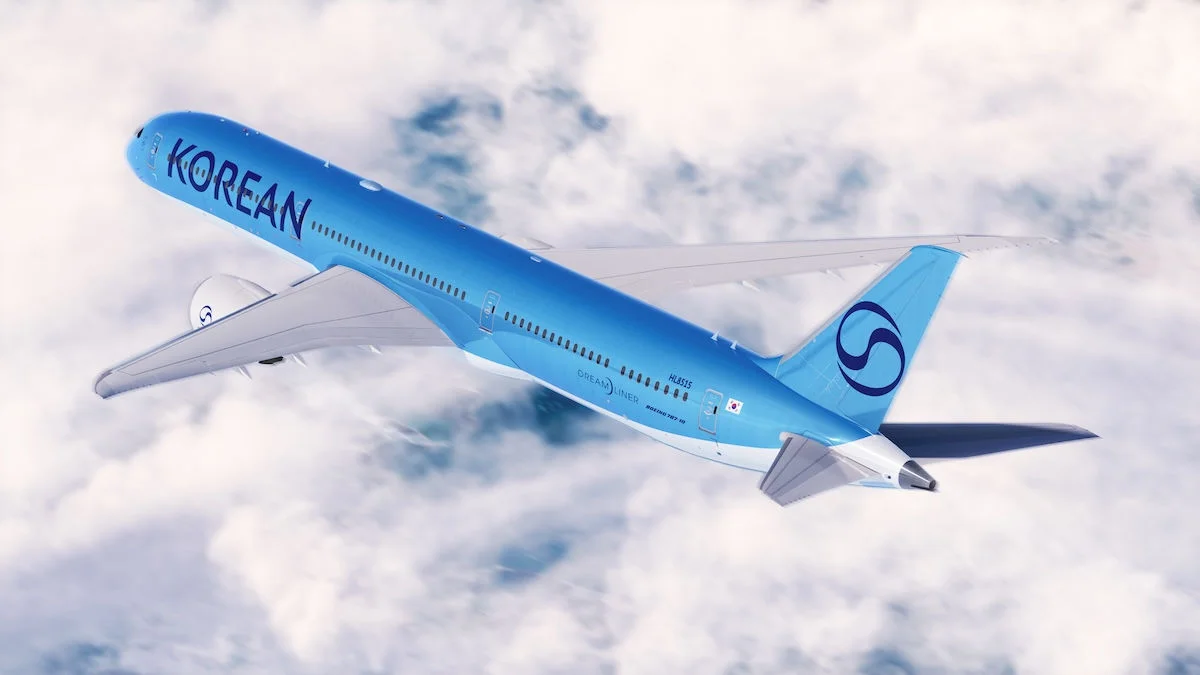



Korean Air reduced its aircraft carbon emissions by more than 420,000 tons in 2025 through comprehensive fuel management and fleet modernization.
Data from the airline’s Q1 2026 Fuel Management Steering Committee showed 2025 flight emissions totaled 12,184,169 tons—a 3.3% reduction from 12,604,224 tons in 2024. Notably, this decrease was achieved despite a 2.6% increase in flight operations.
This reduction is attributed to precise fuel management and collaboration across all operational sectors, including flight control, maintenance, and passenger services.
Key Initiatives
Korean Air implemented several key initiatives to drive these reductions:
AI integration and governance
Korean Air governs these efforts through a quarterly Fuel Management Steering Committee that audits performance and sets strategy. The airline also drives continuous improvement by incentivizing employee-led carbon reduction ideas.
Transitioning to an AI-powered digital system has also enhanced data precision. By analyzing baggage and potable water weight, the airline improved weight prediction accuracy — technology recognized as a “Data Insight & Pioneer” winner at SkyTeam’s “The Aviation Challenge 2025”.
“This reduction was driven by collaboration across all operational sectors and the participation of our employees,” said a Korean Air representative. “We remain committed to meeting our carbon reduction goals and continuing our journey toward sustainable aviation.”
Share this:
Discover more from Great Travel Philippines
Subscribe to get the latest posts sent to your email.